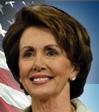
 Join Rickey Bevington tonight for All Things Considered. Four schools may have to give back money after the state tosses altered test scores. Plus, House Speaker Nancy Pelosi talks about the CIA and the healthcare debate. These stories and more tonight on All Things Considered starting at 4 PM on GPB Radio. Join us!
Showing posts with label healthcare. Show all posts
Showing posts with label healthcare. Show all posts
Thursday, July 9, 2009
All Things Considered Thursday, July 9, 2009
Join Rickey Bevington tonight for All Things Considered. Four schools may have to give back money after the state tosses altered test scores. Plus, House Speaker Nancy Pelosi talks about the CIA and the healthcare debate. These stories and more tonight on All Things Considered starting at 4 PM on GPB Radio. Join us!


Monday, June 15, 2009
Sen. Isakson Promotes Healthcare Competition
U.S. Senator Johnny Isakson says competition is essential to solving the nation’s healthcare problems. His comments came Monday just before President Barack Obama addressed medical experts about national healthcare reform. Senator Isakson said it’s not the quality of American healthcare that’s the problem … it’s the number of uninsured. His solution? -- Improving the current system’s combination of private and public healthcare:
Isakson says Medicare Part D is a model of success … where he says thanks to competing providers nearly all seniors now have prescription drug coverage, premium costs are down, and the number of providers is up.
Many Republicans fear the Obama Administration will bring the nation toward a single-payer government system. Several hours after Isakson’s comments President Barack Obama declared to the American Medical Association in Chicago that he does not favor socialized medicine.
“Having private competition, facilities like Emory that are private, public like Grady competing with one another is a good system. What we have got to guard against is becoming a single-payer government paying system. You take competition out of healthcare and you’ll have less quality and a higher cost.”
Isakson says Medicare Part D is a model of success … where he says thanks to competing providers nearly all seniors now have prescription drug coverage, premium costs are down, and the number of providers is up.
Many Republicans fear the Obama Administration will bring the nation toward a single-payer government system. Several hours after Isakson’s comments President Barack Obama declared to the American Medical Association in Chicago that he does not favor socialized medicine.
Wednesday, January 14, 2009
Medicaid Ailing? The Rx: One Point Six Percent
To help plug some of the two billion dollar budget deficit, Governor Sonny Perdue is proposing what is being commonly called the "hospital bed" tax.
It was widely known Governor Perdue was considering such a measure to help plug the 200 million dollar Medicaid and Peachcare shortfall.
And in his State of the State address, Perdue announced a one point six percent tax on hospitals and insurance plans. Perdue's proposal is actually less than previous numbers that were recently floated. Still, it upset Democrats, like State Senator Robert Brown of Macon.
"I've never heard of any process like that, and it certainly doesn't make any sense," said Brown. "At first blush, this just seems like the absolute wrong way to go."
Some Republicans privately expressed apprehension about the proposal, although, they say the alternative is "much worse." Several hospital and health care lobbyists say they need to study the plan more before they make a final determination. Although, one lobbyist at the Capitol remarked, "It's doubtful hospitals will like this."
Wednesday, December 24, 2008
Governor offers new plan to charge hospital fees
Rural hospitals worry about a new plan by Governor Sonny Perdue. He wants to cut-down the state’s Medicaid and Peachcare deficit with a new hospital fee. But that proposal could push some rural hospitals over the brink financially.
Within Georgia’s budget deficit of around two-billion dollars is a significant shortfall in funding for Medicaid and Peachcare--insurance for children of the working poor. Bert Brantley with the Governor’s office says it’s a crisis that needs a solution sooner than later:
"If we don’t do something, there will be significant cuts in reimbursement rates to hospitals...in the amount of people that can receive coverage from Medicaid and Peachcare--really some very difficult things that are going to cost us in the long run."
Earlier this year, a plan was put on the table that would charge health insurance companies extra fees. That offering drew strong push-back from insurers. Now, this new proposal would charge every hospital a flat fee based on a percentage of net revenues.
The money would be pooled to draw down more federal money for healthcare. Brantley says it’s something Georgia’s bigger hospitals that specialize in trauma care are clamoring for:
"They want help in the trauma area...they want increased rates for Medicaid. When they cover a Medicaid patient, they don’t get 100-percent for the cost they incur."
But Brantley acknowledges this plan could be a problem for smaller town and rural hospitals across Georgia that don’t offer trauma care and other services covered by federal money. 55 such hospitals in the state are represented by HomeTown Health--the organization’s president and CEO is Jimmy Lewis:
"In rural Georgia especially so many of the hospitals are already cash-starved where we have many who have less than 10 days cash on hand. For them to have to accept a tax on top of what they’re currently doing, especially a tax on current net revenues, would be a catastrophic blow to them."
Lewis says unemployment in rural areas leads to more people who can’t pay for services at those hospitals-making it even harder for hospital cash flow. He says perhaps up to 10 hospitals would be on the brink financially under the proposed fee.
The Governor’s office says the plan is being put forth now to spark full discussion, ahead of the General Assembly session next month.
Sunday, July 27, 2008
Patient advocates: the doctor will see you. Now.
After three surgeries, Judy Sherer still had chronic pain in her left shoulder. She'd lost faith in her doctors, and in despair tried a new health benefit offered by her employer.
The service, Health Advocate, is a call-in center that helps customers find the right doctor, haggle over insurance coverage and manage other medical system headaches.
An advocate helped Sherer find a new surgeon — one who found metal shavings left in her shoulder by a previous doctor. The advocate also negotiated the charge for her physical therapy down to $40 per visit from the $200 she was told initially.
"It saved me a ton of money," said Sherer, 63, of Norcross, Ga. "I'm very, very pleased."
Health Advocate is one of a growing number of U.S. companies offering some form of advocacy services to medical consumers.
Currently, the health advocacy business is an industry with about $50 million to $75 million in annual revenue but only about a half-dozen companies of any significant size, said Richard Rakowski of Intersection LLC, a Connecticut-based investment and development firm that has researched the field.
More than ever, people need help negotiating the medical system, said Jessica Greene, a University of Oregon health policy analyst.
"We're asking consumers to make more complicated decisions, but the numeracy and health literacy skills of many consumers are not at the level needed to handle this new responsibility," Greene said.
Though some consumers are savvy enough to beat a billing overcharge or probe doctors' litigation histories, they don't have the time for such labors, experts said.
Indeed, the largest customers of health advocacy services are companies, not individuals. "The employers are interested because it means their employees are not on the phone taking care of doctor's visits" during work hours, Fischer said.
Some other companies have always focused on individuals, especially rich ones.One example is $10,000-a-year PinnacleCare, founded in 2002 by John Hutchins, who created a concierge-like service at the Cleveland Clinic. He later used his connections to build a national network of doctors for his private health advisory start-up.
The Baltimore-based company is essentially a club for millionaires and billionaires that puts nurses and social workers in touch with members. Not only will they help members find top-level care, they will get them moved to the head of the line. PinnacleCare advisers will even meet the patient at a doctor's office or hospital.
PinnacleCare has about 1,700 member-families. One satisfied customer is Kirk Posmantur, 45, the founder and chairman of Axcess Luxury & Lifestyle. His Atlanta-based company markets handmade watches, private jets and other luxury items to the affluent.
(The Associated Press)"It's a no-brainer for those who've got net worth of $5 million or more," he said. "You've got people who advise you on your taxes. You've got people who advise you on how to manage your money. But what's more important than your health?"
Click here for more GPB News coverage of health issues.
Monday, June 23, 2008
House ok's Fort Benning hospital funding bill

Martin Army Community Hospital (Courtesy)
Fort Benning's aging Martin Army Community Hospital will be rebuilt to the tune of $350 million, if a vote approved by the House last week passes a Senate vote and is signed into law by President George Bush.
Army officials say the facility suffers from significant infrastructure problems, among them a corroded plumbing system, an overtaxed electrical system and a decaying roof.
A hospital spokesperson says they want to build a traumatic brain injury clinic, for troops wounded in battle.
Officials say a new facility would serve some 100,000 soldiers and dependents in coming years, as part of the national Base Realignment and Closure program.
The bill also includes funding for medical facilities at Camp Lejeune, North Carolina, Fort Sam Houston, Texas, and Fort Riley, Kansas.
The bill now faces a Senate vote.
Click here for more GPB News coverage of events at Fort Benning, and here for more on the BRAC plan.
Wednesday, April 9, 2008
Perdue signs three bills
Today Governor Sonny Perdue signed three bills into law. One allows local school systems to gain more control over education funds by meeting stricter accountability standards. The second gives local communities access to low-interest rate loans for transportation projects. The third makes it easier to open healthcare facilities in Georgia.
Thursday, February 21, 2008
NE Georgia group has plan to cover uninsured
An anti-poverty group in northeast Georgia is pushing an aggressive plan to help get basic medical care to uninsured residents.
The three-million dollar plan has been proposed by the group OneAthens. It’s not health insurance, but an arrangement meant to deliver basic medical services to the uninsured. The group says about 19-percent of Athens residents don’t have health coverage.
One of the main recommendations is to hire more clinic and hospital staff dedicated to treating low-income residents. OneAthens says this would siphon away the millions spent yearly by the two area hospitals for indigent care. A recent annual report says those hospitals spent 79-million dollars on uninsured patients.
OneAthens says funding would come from a variety of sources--the county, area hospitals, federal grants, and the state. The group's healthcare committee chairman told the Athens-Banner Herald he’d like to ask state lawmakers to allow Athens residents to consider a new sales tax.
The group hopes to get the five-year funding plan off-the-ground in September.
The three-million dollar plan has been proposed by the group OneAthens. It’s not health insurance, but an arrangement meant to deliver basic medical services to the uninsured. The group says about 19-percent of Athens residents don’t have health coverage.
One of the main recommendations is to hire more clinic and hospital staff dedicated to treating low-income residents. OneAthens says this would siphon away the millions spent yearly by the two area hospitals for indigent care. A recent annual report says those hospitals spent 79-million dollars on uninsured patients.
OneAthens says funding would come from a variety of sources--the county, area hospitals, federal grants, and the state. The group's healthcare committee chairman told the Athens-Banner Herald he’d like to ask state lawmakers to allow Athens residents to consider a new sales tax.
The group hopes to get the five-year funding plan off-the-ground in September.
Monday, October 22, 2007
GOP governors discuss healthcare at Lake Oconee
Lake Oconee in eastern Georgia was the host for Republican governors and their staff over the weekend--the reason was a retreat and discussion on healthcare issues. The GOP hopes to make a better connection with voters over issues such as healthcare costs, health savings accounts, and free-market proposals to boost competition. The meeting of the Republican Governors Association included former House Speaker Newt Gingrich and former Georgia governor Zell Miller, both serving as speakers. Sonny Perdue is the chairman of the GOP governors group.
Subscribe to:
Posts (Atom)